



GameStop's Mega-Acquisition Play | Retail Consolidation Reshapes Collectibles & Gaming Markets
- CEO Cohen targets 10x valuation through major consumer company acquisition; 1,060+ store closures signal shift from physical retail to collectibles-driven model (28% of Q3 2025 revenue)

















概览
GameStop CEO Ryan Cohen is executing an unprecedented retail transformation strategy centered on acquiring a major publicly traded consumer company to increase the company's valuation from $10.5 billion to $100 billion by 2026. Announced January 29-30, 2026, Cohen's acquisition thesis targets undervalued consumer retailers with "sleepy management" that can benefit from operational improvements—a strategy he successfully deployed at Chewy before its $3 billion Amazon acquisition. The company has accumulated $3.9 billion in cash and liquid securities to fund this transformational deal, which would unlock a $35 billion performance incentive package contingent on achieving $10 billion EBITDA and $100 billion market cap.
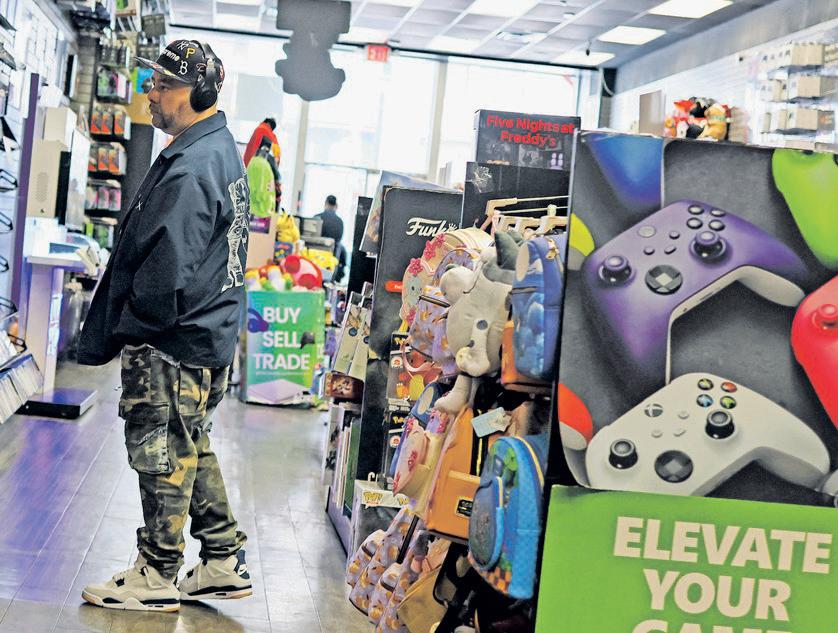
For cross-border e-commerce sellers, this consolidation trend signals major market restructuring in gaming merchandise and collectibles distribution. GameStop's operational transformation since Cohen's September 2023 appointment demonstrates the viability of legacy retail repositioning: gross margins expanded 7 percentage points, net income reached $77.1 million in Q3 2025 (reversing five consecutive years of losses), and collectibles now represent 28% of total revenue. However, the company's aggressive store closure strategy—1,060 closures across 2024-2026 (590 in 2024, 470 in early 2026) plus international market exits (Ireland, Switzerland, Austria, Germany, Italy, with France and Canada subsidiaries for sale)—indicates GameStop is abandoning traditional retail competition. This creates direct opportunities for third-party sellers in gaming peripherals, collectibles, and merchandise categories to capture displaced customer bases, particularly in exited international markets where marketplace platforms can now serve previously GameStop-dependent consumers.
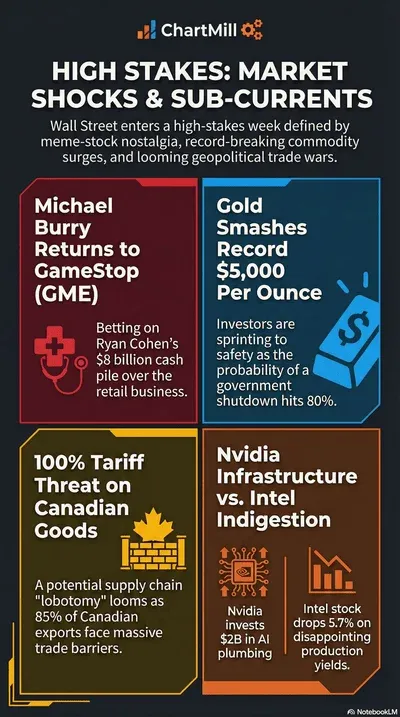
The acquisition strategy reflects broader retail sector consolidation patterns where legacy retailers pursue transformative M&A rather than organic growth. Michael Burry's public support (he holds significant GameStop shares and predicted the 2008 financial crisis) lends credibility to Cohen's thesis, though Wall Street analysts remain skeptical—a divergence suggesting sophisticated investors see undervalued opportunities mainstream consensus has dismissed. The compensation structure mirrors Tesla's Elon Musk model, aligning Cohen's personal financial interests ($35 billion potential upside) with shareholder value creation. For sellers, this indicates GameStop's future competitive positioning depends entirely on acquisition execution; success would create a diversified consumer platform potentially competing across multiple categories, while failure would further consolidate market share among Amazon, eBay, and specialty marketplaces. The shareholder vote scheduled for March-April 2026 represents a critical inflection point—approval signals aggressive growth intent, while rejection would force GameStop toward incremental improvements insufficient to address fundamental gaming retail challenges (digital distribution, changing consumer preferences, online competition).
問題 7
How does GameStop's collectibles business growth (28% of Q3 2025 revenue) affect seller strategy?
GameStop's deliberate pivot toward collectibles—growing from negligible revenue to 28% of total sales—demonstrates strong consumer demand in this category and validates the business model shift from declining physical game sales. This indicates collectibles represent a $2-3 billion annual opportunity for GameStop based on their $10.5 billion market cap and improving profitability. For cross-border sellers, this signals collectibles as a high-growth category with proven consumer demand: trading cards, gaming collectibles, memorabilia, and limited-edition merchandise are driving GameStop's profitability improvement. Sellers should expand collectibles inventory, particularly in gaming-adjacent categories (anime figures, board game collectibles, esports merchandise) where GameStop's store closures create supply gaps. The category's growth trajectory suggests 15-25% annual expansion potential through 2026-2027, particularly in international markets where GameStop is exiting.
What does Cohen's acquisition strategy mean for sellers competing in gaming and collectibles categories?
Cohen's acquisition thesis targets undervalued consumer retailers with operational improvement potential—a strategy that could expand GameStop's competitive footprint beyond gaming into adjacent consumer categories. If successful, GameStop could become a diversified consumer platform competing across multiple product categories, potentially threatening sellers in collectibles (28% of Q3 2025 revenue), merchandise, and consumer goods. However, the high-risk nature of the strategy (Cohen himself acknowledged it's 'either genius or totally foolish') means execution risk is substantial. For sellers, this creates a 12-18 month window of uncertainty: GameStop's focus on acquisition integration may reduce competitive pressure in core gaming categories, while success could introduce a well-capitalized competitor. Sellers should monitor the March-April 2026 shareholder vote as a key decision point—approval signals aggressive expansion intent, while rejection would indicate GameStop's continued focus on core gaming retail.