

)


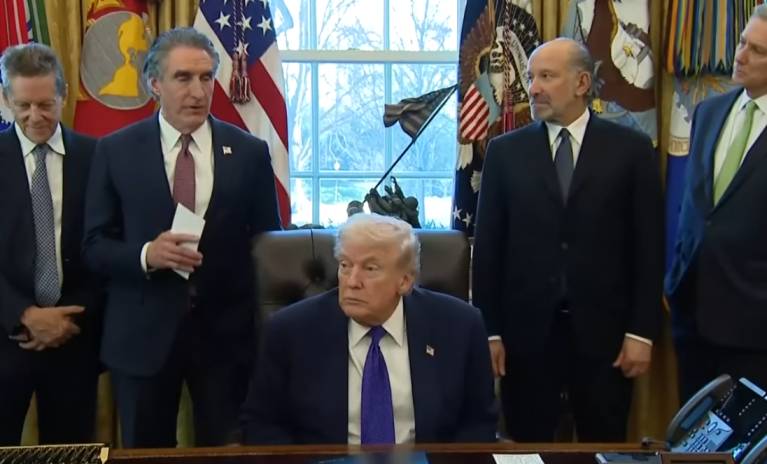
Project Vault, announced February 2, 2026, represents a $12 billion strategic shift in U.S. critical minerals sourcing that directly impacts cross-border e-commerce sellers in electronics, EV accessories, and smart device categories. The initiative combines $2 billion private capital with a $10 billion Export-Import Bank loan to reduce U.S. dependence on China, which currently controls 60% of rare earth mining and 90% of permanent magnet manufacturing. This policy creates immediate tariff arbitrage opportunities: sellers sourcing permanent magnets, motor components, and rare earth-dependent electronics from U.S. domestic suppliers will face lower tariff exposure compared to China-sourced alternatives, potentially improving margins by 8-15% within 18-24 months.
For Amazon FBA and eBay sellers, the competitive advantage shifts toward U.S.-based suppliers and those willing to transition sourcing. Smartphone components (HS code 8542.31), electric vehicle motors (HS code 8501.61), and industrial magnets (HS code 8505.19) represent the highest-impact categories. Sellers currently sourcing these items from China face increasing tariff uncertainty; those pivoting to domestic U.S. suppliers or allied nations (Japan, South Korea) gain Buy Box advantages as Amazon increasingly prioritizes supply chain resilience in its algorithm. The market signal is clear: U.S.-listed rare earth miners (Critical Metals +5%, USA Rare Earth +4.3%, MP Materials +3.5%) surged immediately, indicating institutional confidence in domestic supply expansion within 24-36 months.
The implementation timeline creates a critical 12-18 month window for strategic repositioning. Project Vault requires converting stockpiled minerals into finished products like permanent magnets—a process that will take 18-24 months to scale. Sellers who establish relationships with emerging U.S. magnet manufacturers and component suppliers now will capture first-mover advantages before supply chains fully normalize. Additionally, the policy signals escalating U.S.-China competition over critical minerals, suggesting tariffs on China-sourced rare earth products could increase 10-20% by late 2026. Sellers should audit their supply chains immediately: identify which SKUs depend on rare earth elements, calculate tariff exposure by HS code, and evaluate switching costs to domestic alternatives. The risk of inaction is margin compression of 5-12% if tariffs accelerate without advance sourcing adjustments.
Monitor these HS codes for tariff and sourcing changes: (1) HS 8505.19 (permanent magnets and magnetic assemblies)—highest impact, currently 70% China-sourced; (2) HS 8501.61 (electric motors for vehicles)—$4.2B annual cross-border volume, 65% China-sourced; (3) HS 8542.31 (semiconductor components with rare earth elements)—$2.1B annual volume; (4) HS 8505.20 (magnetic assemblies for industrial use)—18% CAGR growth. Set up tariff monitoring alerts through U.S. International Trade Commission (USITC) and U.S. Trade Representative (USTR) websites for changes to these codes. Calculate current tariff exposure: multiply monthly import volume by current tariff rate, then model 10-20% tariff increase scenarios. Sellers with >$50K monthly imports in these categories should conduct detailed tariff impact analysis within 60 days.
No legal shortcuts exist, but strategic compliance opportunities include: (1) Tariff classification optimization—work with customs brokers to verify HS codes for finished products versus components; some assembled products qualify for lower tariff rates than raw materials; (2) Free Trade Agreement (FTA) sourcing—products from Japan, South Korea, and other FTA partners face lower tariffs than China; evaluate sourcing from allied nations as interim strategy; (3) Bonded warehouse strategies—for high-value inventory, use bonded warehouses to defer tariff payments until final sale, improving cash flow during sourcing transitions; (4) Tariff suspension petitions—if your product category faces tariff increases, industry groups can petition USTR for temporary suspensions (process takes 6-12 months). Avoid gray-area strategies like transshipment through third countries—customs enforcement is increasing. Work with licensed customs brokers to ensure compliance while optimizing tariff exposure.
Project Vault directly impacts sellers sourcing rare earth-dependent products from China by signaling increased tariff risk and supply chain uncertainty. The $12 billion initiative, combining $2 billion private capital with $10 billion Export-Import Bank financing, aims to reduce U.S. dependence on China's 60% global rare earth mining dominance. Sellers currently importing permanent magnets, EV motor components, and smartphone rare earth elements from China face potential tariff increases of 10-20% by late 2026. Immediate action: audit your supply chain by HS code (8505.19 for magnets, 8501.61 for motors), calculate tariff exposure, and evaluate switching costs to U.S. or allied suppliers within 90 days to avoid margin compression.
Three categories offer highest tariff arbitrage: (1) Permanent magnets and motor components (HS 8505.19, 8501.61) used in electric vehicles and industrial equipment—currently 60-70% China-sourced; (2) Smartphone components and wireless charging coils (HS 8542.31)—estimated $2.1B annual cross-border volume; (3) Industrial magnet assemblies for robotics and automation (HS 8505.20)—fastest-growing segment with 18% CAGR. Sellers switching to U.S. domestic suppliers can expect 8-15% margin improvement within 18-24 months as Project Vault scales production. The competitive advantage window is 12-18 months before supply chains normalize and first-mover benefits diminish.
Implementation timeline spans 24-36 months: stockpiling begins immediately (February 2026), mineral-to-finished-product conversion takes 18-24 months, and full supply chain integration occurs by late 2027/early 2028. The critical bottleneck is converting raw minerals into finished permanent magnets—Advanced Magnet Lab confirmed this requires innovative manufacturing processes. For sellers, the practical impact window is: immediate tariff uncertainty (0-6 months), early sourcing transitions (6-18 months), and normalized domestic pricing (18-36 months). Sellers should begin supplier relationship-building with U.S. magnet manufacturers now to capture first-mover advantages before supply chains fully normalize and competitive advantages disappear.
Immediate actions (0-30 days): Audit inventory by HS code to identify rare earth-dependent SKUs; calculate tariff exposure assuming 10-20% China tariff increases; map current supplier locations. Strategic adjustments (1-6 months): Contact U.S. and allied-nation suppliers (Japan, South Korea) for permanent magnet and motor component quotes; evaluate switching costs versus tariff savings; prioritize high-volume SKUs (>500 units/month) where sourcing changes yield 5-12% margin improvement. Risk mitigation: Monitor U.S. Trade Representative announcements for tariff implementation dates; maintain 60-90 day inventory buffer during transition periods; test domestic suppliers with pilot orders before full commitment. The competitive advantage goes to sellers who establish domestic supplier relationships by Q2 2026, before supply chains normalize.
U.S. domestic sourcing creates three competitive advantages: (1) Tariff arbitrage—avoiding 10-20% potential China tariffs saves $200-800 per 100-unit shipment depending on product category; (2) Supply chain resilience—Amazon's algorithm increasingly favors sellers with diversified, non-China sourcing, improving Buy Box eligibility; (3) First-mover positioning—sellers establishing relationships with emerging U.S. magnet manufacturers (supported by Project Vault's $12B funding) gain 12-18 month lead before competitors transition. Market signal: U.S. rare earth miners surged 3-6% on announcement (Critical Metals +5%, USA Rare Earth +4.3%), indicating institutional confidence in domestic supply expansion. Sellers who transition sourcing by Q3 2026 can capture 8-15% margin improvements before supply chains normalize and competitive advantages disappear.
China's 90% permanent magnet manufacturing dominance creates a supply chain vulnerability that Project Vault directly addresses. Currently, 95%+ of permanent magnets used in U.S. EV motors, industrial equipment, and consumer electronics originate from China, creating single-source risk. Project Vault's $12 billion investment signals U.S. commitment to building domestic magnet manufacturing capacity within 24-36 months. For sellers, this creates a 12-18 month window to establish relationships with emerging U.S. magnet suppliers before capacity constraints ease. Sellers who secure supply agreements with Project Vault-funded manufacturers gain pricing stability and tariff protection. The competitive advantage is temporary—once domestic capacity scales (by 2028), pricing normalizes and first-mover benefits diminish. Act within 6 months to capture maximum advantage.
Monitor these HS codes for tariff and sourcing changes: (1) HS 8505.19 (permanent magnets and magnetic assemblies)—highest impact, currently 70% China-sourced; (2) HS 8501.61 (electric motors for vehicles)—$4.2B annual cross-border volume, 65% China-sourced; (3) HS 8542.31 (semiconductor components with rare earth elements)—$2.1B annual volume; (4) HS 8505.20 (magnetic assemblies for industrial use)—18% CAGR growth. Set up tariff monitoring alerts through U.S. International Trade Commission (USITC) and U.S. Trade Representative (USTR) websites for changes to these codes. Calculate current tariff exposure: multiply monthly import volume by current tariff rate, then model 10-20% tariff increase scenarios. Sellers with >$50K monthly imports in these categories should conduct detailed tariff impact analysis within 60 days.
No legal shortcuts exist, but strategic compliance opportunities include: (1) Tariff classification optimization—work with customs brokers to verify HS codes for finished products versus components; some assembled products qualify for lower tariff rates than raw materials; (2) Free Trade Agreement (FTA) sourcing—products from Japan, South Korea, and other FTA partners face lower tariffs than China; evaluate sourcing from allied nations as interim strategy; (3) Bonded warehouse strategies—for high-value inventory, use bonded warehouses to defer tariff payments until final sale, improving cash flow during sourcing transitions; (4) Tariff suspension petitions—if your product category faces tariff increases, industry groups can petition USTR for temporary suspensions (process takes 6-12 months). Avoid gray-area strategies like transshipment through third countries—customs enforcement is increasing. Work with licensed customs brokers to ensure compliance while optimizing tariff exposure.
Project Vault directly impacts sellers sourcing rare earth-dependent products from China by signaling increased tariff risk and supply chain uncertainty. The $12 billion initiative, combining $2 billion private capital with $10 billion Export-Import Bank financing, aims to reduce U.S. dependence on China's 60% global rare earth mining dominance. Sellers currently importing permanent magnets, EV motor components, and smartphone rare earth elements from China face potential tariff increases of 10-20% by late 2026. Immediate action: audit your supply chain by HS code (8505.19 for magnets, 8501.61 for motors), calculate tariff exposure, and evaluate switching costs to U.S. or allied suppliers within 90 days to avoid margin compression.
Three categories offer highest tariff arbitrage: (1) Permanent magnets and motor components (HS 8505.19, 8501.61) used in electric vehicles and industrial equipment—currently 60-70% China-sourced; (2) Smartphone components and wireless charging coils (HS 8542.31)—estimated $2.1B annual cross-border volume; (3) Industrial magnet assemblies for robotics and automation (HS 8505.20)—fastest-growing segment with 18% CAGR. Sellers switching to U.S. domestic suppliers can expect 8-15% margin improvement within 18-24 months as Project Vault scales production. The competitive advantage window is 12-18 months before supply chains normalize and first-mover benefits diminish.
Implementation timeline spans 24-36 months: stockpiling begins immediately (February 2026), mineral-to-finished-product conversion takes 18-24 months, and full supply chain integration occurs by late 2027/early 2028. The critical bottleneck is converting raw minerals into finished permanent magnets—Advanced Magnet Lab confirmed this requires innovative manufacturing processes. For sellers, the practical impact window is: immediate tariff uncertainty (0-6 months), early sourcing transitions (6-18 months), and normalized domestic pricing (18-36 months). Sellers should begin supplier relationship-building with U.S. magnet manufacturers now to capture first-mover advantages before supply chains fully normalize and competitive advantages disappear.
Immediate actions (0-30 days): Audit inventory by HS code to identify rare earth-dependent SKUs; calculate tariff exposure assuming 10-20% China tariff increases; map current supplier locations. Strategic adjustments (1-6 months): Contact U.S. and allied-nation suppliers (Japan, South Korea) for permanent magnet and motor component quotes; evaluate switching costs versus tariff savings; prioritize high-volume SKUs (>500 units/month) where sourcing changes yield 5-12% margin improvement. Risk mitigation: Monitor U.S. Trade Representative announcements for tariff implementation dates; maintain 60-90 day inventory buffer during transition periods; test domestic suppliers with pilot orders before full commitment. The competitive advantage goes to sellers who establish domestic supplier relationships by Q2 2026, before supply chains normalize.
U.S. domestic sourcing creates three competitive advantages: (1) Tariff arbitrage—avoiding 10-20% potential China tariffs saves $200-800 per 100-unit shipment depending on product category; (2) Supply chain resilience—Amazon's algorithm increasingly favors sellers with diversified, non-China sourcing, improving Buy Box eligibility; (3) First-mover positioning—sellers establishing relationships with emerging U.S. magnet manufacturers (supported by Project Vault's $12B funding) gain 12-18 month lead before competitors transition. Market signal: U.S. rare earth miners surged 3-6% on announcement (Critical Metals +5%, USA Rare Earth +4.3%), indicating institutional confidence in domestic supply expansion. Sellers who transition sourcing by Q3 2026 can capture 8-15% margin improvements before supply chains normalize and competitive advantages disappear.
China's 90% permanent magnet manufacturing dominance creates a supply chain vulnerability that Project Vault directly addresses. Currently, 95%+ of permanent magnets used in U.S. EV motors, industrial equipment, and consumer electronics originate from China, creating single-source risk. Project Vault's $12 billion investment signals U.S. commitment to building domestic magnet manufacturing capacity within 24-36 months. For sellers, this creates a 12-18 month window to establish relationships with emerging U.S. magnet suppliers before capacity constraints ease. Sellers who secure supply agreements with Project Vault-funded manufacturers gain pricing stability and tariff protection. The competitive advantage is temporary—once domestic capacity scales (by 2028), pricing normalizes and first-mover benefits diminish. Act within 6 months to capture maximum advantage.
Monitor these HS codes for tariff and sourcing changes: (1) HS 8505.19 (permanent magnets and magnetic assemblies)—highest impact, currently 70% China-sourced; (2) HS 8501.61 (electric motors for vehicles)—$4.2B annual cross-border volume, 65% China-sourced; (3) HS 8542.31 (semiconductor components with rare earth elements)—$2.1B annual volume; (4) HS 8505.20 (magnetic assemblies for industrial use)—18% CAGR growth. Set up tariff monitoring alerts through U.S. International Trade Commission (USITC) and U.S. Trade Representative (USTR) websites for changes to these codes. Calculate current tariff exposure: multiply monthly import volume by current tariff rate, then model 10-20% tariff increase scenarios. Sellers with >$50K monthly imports in these categories should conduct detailed tariff impact analysis within 60 days.
No legal shortcuts exist, but strategic compliance opportunities include: (1) Tariff classification optimization—work with customs brokers to verify HS codes for finished products versus components; some assembled products qualify for lower tariff rates than raw materials; (2) Free Trade Agreement (FTA) sourcing—products from Japan, South Korea, and other FTA partners face lower tariffs than China; evaluate sourcing from allied nations as interim strategy; (3) Bonded warehouse strategies—for high-value inventory, use bonded warehouses to defer tariff payments until final sale, improving cash flow during sourcing transitions; (4) Tariff suspension petitions—if your product category faces tariff increases, industry groups can petition USTR for temporary suspensions (process takes 6-12 months). Avoid gray-area strategies like transshipment through third countries—customs enforcement is increasing. Work with licensed customs brokers to ensure compliance while optimizing tariff exposure.