



Tech Stock Volatility & AI Disruption Risk | E-Commerce Seller Payment & Platform Strategy Impact February 2026
- PayPal leadership transition amid 20%+ stock decline signals payment processor uncertainty; software sector down 15% in January as AI disruption fears reshape seller tool ecosystems and operational costs




















































概览
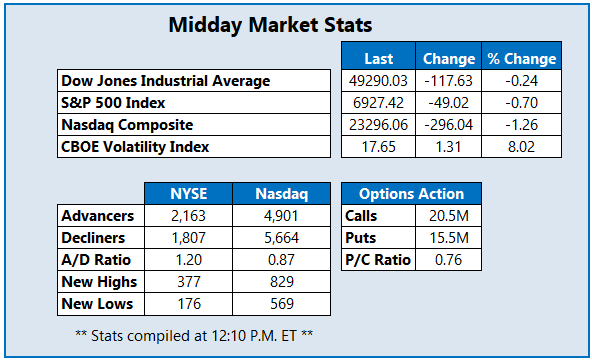
On February 3, 2026, US technology stocks experienced significant volatility as investors processed conflicting signals about artificial intelligence disruption and software-as-a-service (SaaS) business model sustainability. The Nasdaq Composite fell 2.1% while the S&P 500 declined 1.3%, with the S&P North American software index down 15% in January—its largest monthly drop since October 2008. This market turbulence directly impacts cross-border e-commerce sellers through multiple operational channels.
PayPal's Strategic Transition Creates Payment Processing Uncertainty: PayPal's stock tumbled over 20% after missing 2026 profit forecasts, prompting the appointment of Enrique Lores (former HP CEO) as new leadership. For sellers relying on PayPal as a payment processor, this leadership change signals potential operational restructuring. Historically, payment processor leadership transitions precede fee adjustments, policy changes, or service modifications within 60-90 days. Sellers should anticipate possible announcements regarding transaction fees (currently 2.2% + $0.30 for standard transactions), cross-border payment rates, or withdrawal processing timelines. The company's earnings miss suggests margin pressure that could translate to seller cost increases or reduced service features.
Software Sector Disruption Reshapes Seller Tool Landscape: The broader software stock decline reflects investor concerns about AI-native companies penetrating traditionally protected markets. Anthropic's announcement of automated AI agents capable of completing legal, data analytics, finance, and sales tasks triggered stock declines across software providers: Salesforce (down 7%), Intuit (down 10%), Workday (down 10%), and Atlassian (down 10%). For e-commerce sellers, this disruption affects critical operational tools. Sellers using Salesforce for CRM, Intuit for accounting, or Workday for HR face potential pricing pressure as these companies defend market share against AI-native competitors. Simultaneously, emerging AI-powered alternatives may offer cost-effective replacements for inventory management, financial forecasting, and customer analytics—creating both opportunity and transition risk.
Contrasting AI Investment Trends Create Seller Opportunity Windows: While software stocks declined, Palantir surged 8.6% and Teradyne climbed 7.8% as investors rotated toward AI beneficiaries. This divergence indicates capital flowing toward infrastructure (semiconductors, data centers) rather than traditional software. Sellers should monitor this shift: companies investing heavily in AI infrastructure may accelerate platform feature releases, offer promotional rates to attract sellers, or expand fulfillment capabilities. Amazon's modest 0.6% gain despite broader tech weakness suggests the platform is positioned as an AI infrastructure beneficiary, potentially enabling competitive advantages in logistics and seller tools.
Macroeconomic Headwinds and Government Shutdown Implications: The partial government shutdown entering its fourth day adds regulatory uncertainty. If extended, shutdown impacts include delayed customs processing (affecting cross-border shipments), postponed regulatory approvals for new seller categories, and potential delays in government contract fulfillment (relevant for sellers in defense/federal supply categories). The House cleared procedural hurdles toward ending the shutdown with a 71-29 Senate vote, suggesting resolution within 1-2 weeks, but sellers should prepare contingency plans for extended delays in international shipments and regulatory approvals.
問題 8
Should sellers invest in AI-powered business tools now or wait for market stabilization?
The market divergence suggests immediate action is warranted: (1) **Evaluate AI-native tools** (Claude Code, ChatGPT plugins) for inventory forecasting, pricing optimization, and customer service—these are becoming commoditized and affordable, (2) **Delay major SaaS investments** in traditional software (Salesforce, Workday) until pricing stabilizes post-disruption, (3) **Prioritize platform-native AI features** (Amazon's new tools) over third-party integrations, (4) **Budget 10-15% contingency** for tool cost increases or migration expenses over next 12 months. The software sector's 15% January decline suggests valuations may compress further, creating better acquisition opportunities for sellers in Q2-Q3 2026.
What payment processor alternatives should sellers evaluate given PayPal's uncertainty?
PayPal's leadership transition and earnings miss create urgency to evaluate alternatives: (1) **Stripe** (2.2% + $0.30 standard rate, strong international support), (2) **Square** (2.6% + $0.30, integrated POS), (3) **2Checkout** (3.5-5.5% depending on volume, 195+ countries), (4) **Wise** (1-2% for cross-border transfers, specialized for international sellers). Sellers should compare rates for their specific transaction mix (domestic vs. cross-border), volume tier, and currency pairs. Request quotes from 2-3 alternatives and negotiate based on PayPal's current rates. Plan migration timeline of 30-60 days if switching, allowing time for customer communication and system integration testing.