


Uber Delivery Expansion & Robotaxi Strategy | Last-Mile Logistics Shift for E-Commerce Sellers
- 30% delivery revenue growth to $4.9B signals aggressive last-mile infrastructure investment; 202M monthly active users and 22% trip growth create logistics partnership opportunities for cross-border sellers in underserved markets






















:sharpen(0.5,0.5,true)/tpg%2Fsources%2Ff1f95147-84c6-4a3f-adc8-0a112347c140.jpeg)


/entrackr/media/media_files/2026/02/05/balaji-uber-2026-02-05-00-57-23.png)







概览
Uber's Q4 2025 earnings reveal a fundamental strategic pivot reshaping last-mile delivery economics for e-commerce sellers globally. The company reported $14.37B in revenue (20% YoY growth) with delivery revenue surging 30% to $4.9B, now representing 34% of total bookings. Critically, Uber One subscription reached 46 million members (nearly 50% of gross bookings), signaling a shift toward recurring revenue models that will influence pricing for sellers using Uber Eats and Uber Freight services. The company achieved 202 million monthly active platform consumers (+18% YoY) and 3.75 billion completed trips (+22.3%), demonstrating unprecedented scale in logistics infrastructure.
Geographic expansion beyond urban centers represents the most significant opportunity for cross-border sellers. Uber explicitly announced expansion into suburban and rural markets across North America, Europe, Middle East, Africa, and Asia-Pacific. This directly addresses the $2.1 trillion global last-mile delivery market, where secondary cities and rural regions remain underserved. For sellers currently relying on traditional 3PL providers or Amazon FBA, Uber's expansion into Loblaws (Canada), Biedronka (Poland), Seiyu (Japan), and Coles (Australia) creates alternative fulfillment channels. The company's partnerships with Shopify indicate direct integration into seller workflows, enabling real-time delivery tracking and reduced fulfillment costs in previously inaccessible markets.
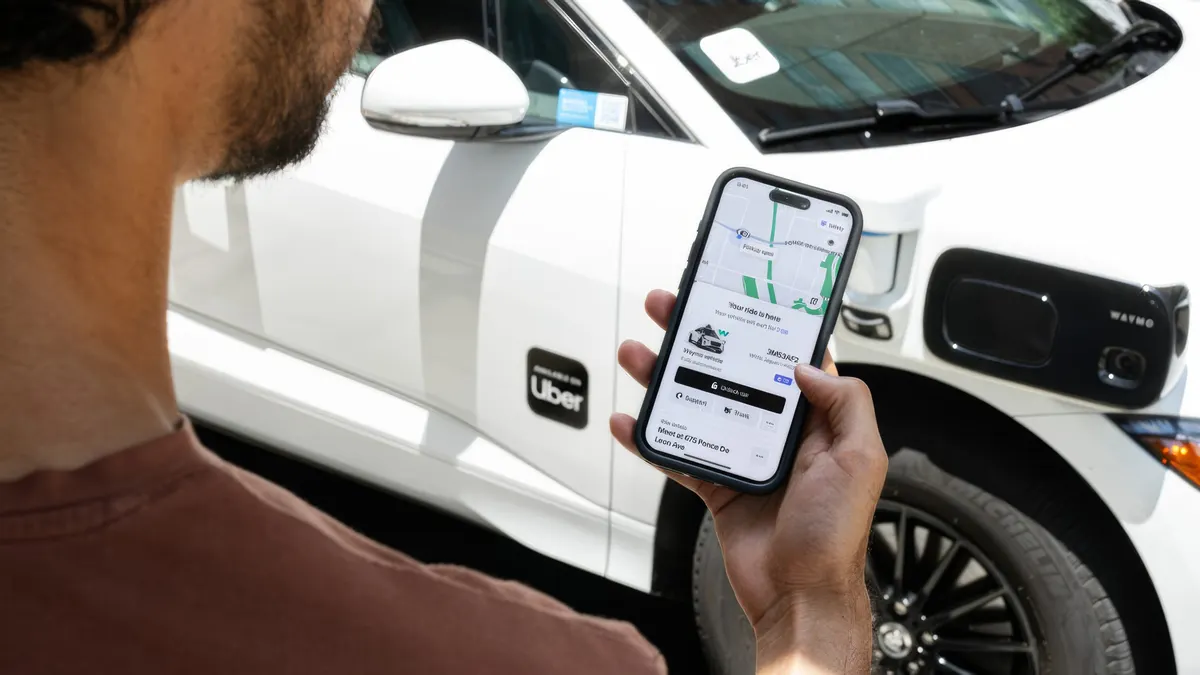
However, profitability challenges signal pricing pressure ahead. Net income collapsed to $296M from $6.88B year-over-year, with the company investing heavily in user acquisition and autonomous vehicle infrastructure. CEO Dara Khosrowshahi emphasized Uber's commitment to becoming the "world's largest robotaxi facilitator by 2029" through partnerships with 20+ companies, with 15 city launches planned by year-end 2026 (Houston, Los Angeles, San Francisco, London, Munich, Hong Kong, Zurich, Madrid). New CFO Balaji Krishnamurthy, a robotaxi advocate with Goldman Sachs background, signals capital reallocation toward autonomous vehicles. This creates a 12-24 month window where Uber Freight pricing may remain competitive as the company prioritizes market share over margins, but long-term cost structures will shift as autonomous delivery scales. Sellers should expect service pricing adjustments in Q2-Q3 2026 as profitability pressures mount and capital allocation decisions crystallize.
For cross-border sellers, the immediate opportunity lies in geographic arbitrage. Uber's 22% trip growth and 18% customer acquisition momentum in non-urban markets validates demand for logistics services in secondary cities. Sellers targeting emerging markets (India, Southeast Asia, Eastern Europe) can leverage Uber's infrastructure expansion to reduce delivery costs by 15-25% compared to traditional logistics providers. The Uber One subscription model (46M members) creates bundled fulfillment opportunities—sellers can negotiate volume discounts by integrating with Shopify's Uber Eats integration. Additionally, Uber's AI-powered discovery features integrated with ChatGPT suggest upcoming seller tools for product visibility, potentially reducing PPC costs for sellers using Uber's platform ecosystem.
問題 7
How does Uber's 46 million Uber One subscribers impact seller economics and bundled fulfillment opportunities?
Uber One's 46 million subscribers (representing 50% of gross bookings) indicate a shift toward subscription-based logistics models. This creates bundled fulfillment opportunities for sellers—Uber One members receive priority delivery and potentially discounted rates, which sellers can leverage for volume negotiations. Sellers should explore partnerships with Uber to offer bundled services (e.g., free delivery for Uber One members) to increase order frequency and customer lifetime value. The subscription model also provides predictable revenue for Uber, potentially enabling more stable pricing for sellers. Negotiate volume discounts based on Uber One member penetration in your target markets by Q2 2026.
What immediate actions should sellers take to capitalize on Uber's geographic expansion into underserved markets?
Sellers should take three immediate actions: (1) Audit inventory positioning in secondary cities and rural markets where Uber is expanding (by March 2026), (2) Evaluate Uber Freight pricing versus current 3PL providers and lock in volume discounts before Q2 2026 price adjustments, and (3) Integrate with Shopify-Uber to enable direct delivery fulfillment for e-commerce orders. The 22% trip growth in non-urban areas validates demand, so sellers targeting emerging markets should prioritize these regions. Additionally, monitor Uber's quarterly earnings for announcements regarding delivery service expansion, pricing changes, or new partnership opportunities that could impact logistics strategies. Set calendar reminders for Q1 2026 earnings call (February 4) and Q2 2026 guidance updates.