





Uber Delivery Surge 30% YoY | E-Commerce Logistics Costs Rise 2026
- Delivery revenue hits $4.9B with 46M Uber One subscribers; Freight segment flat signals margin pressure on last-mile fulfillment costs for cross-border sellers




















:sharpen(0.5,0.5,true)/tpg%2Fsources%2Ff1f95147-84c6-4a3f-adc8-0a112347c140.jpeg)




概览
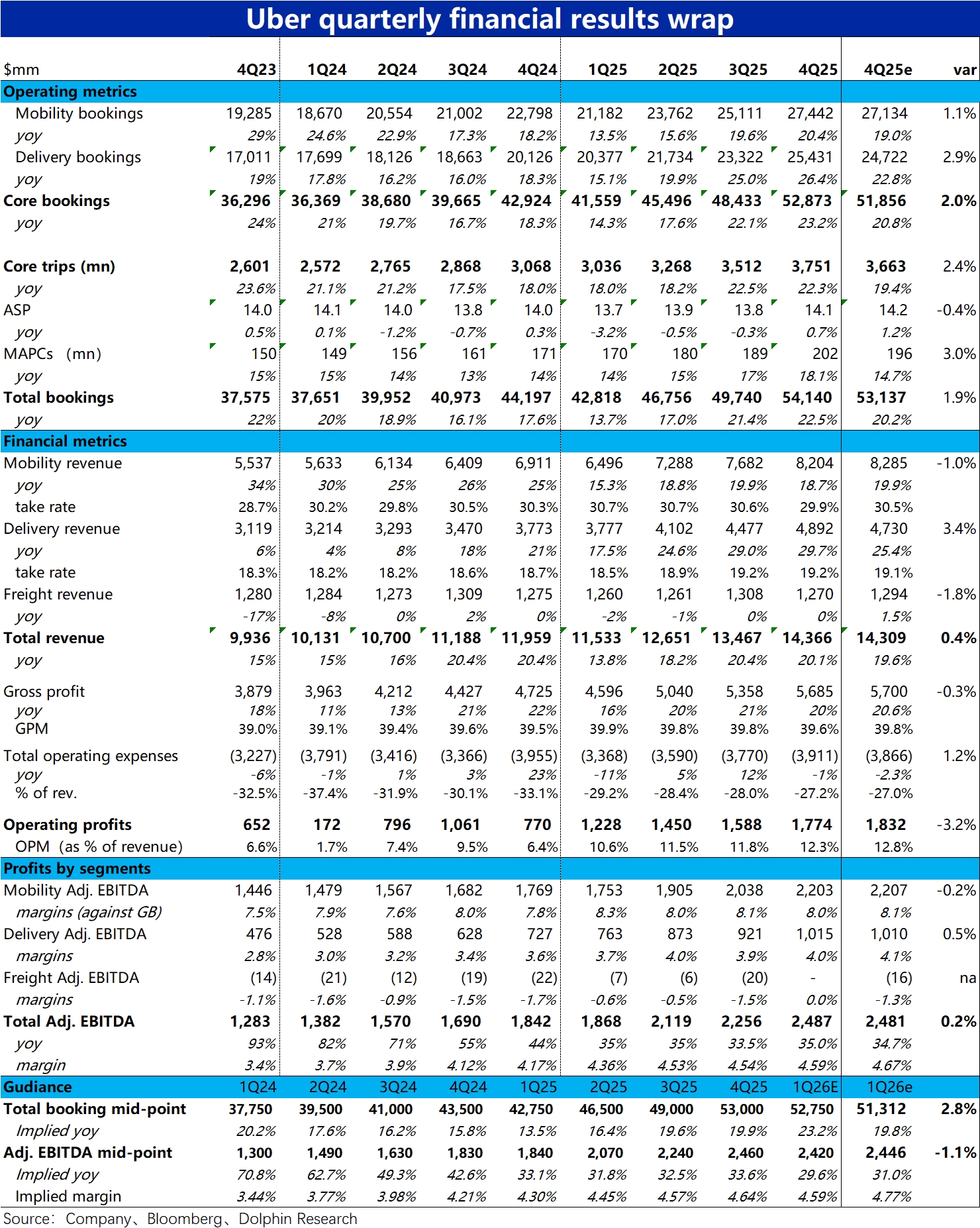
Uber's Q4 2025 earnings reveal a critical inflection point for e-commerce logistics infrastructure. The company reported delivery revenue growth of 30% year-over-year to $4.89 billion, driven by 46 million Uber One subscribers (representing nearly 50% of gross bookings) and geographic expansion into less-dense areas. However, the broader financial picture signals mounting pressure on fulfillment costs for cross-border sellers. Net income collapsed 95.7% to $296 million from $6.88 billion year-over-year, primarily due to aggressive pricing strategies prioritizing user acquisition over profitability, combined with $1.6 billion in equity revaluation headwinds and higher tax obligations across US and Europe markets.
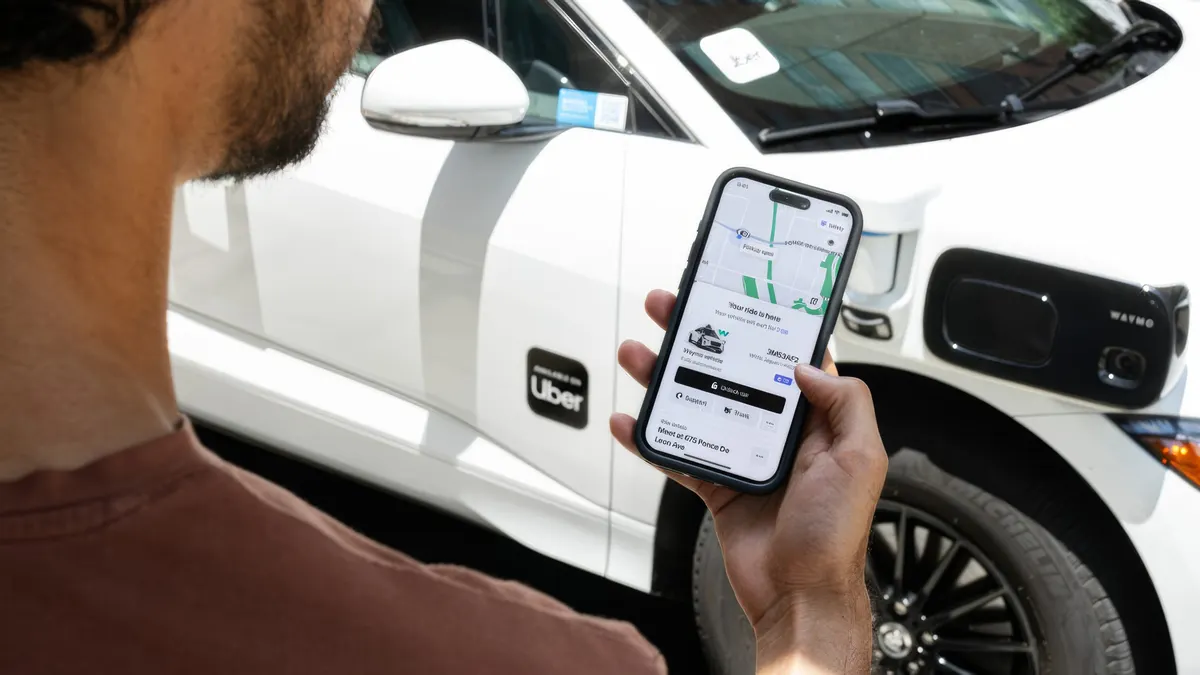
The critical insight for sellers: Uber Freight revenue remained flat at $1.27 billion despite overall platform growth, indicating the company is absorbing margin compression in logistics services. This stagnation reflects Uber's strategic decision to offer cheaper rides and delivery services to capture market share, forcing the company to absorb lower per-transaction revenues. Industry sources indicate tax increases could impact operating margins by 2-4% annually across affected regions. For cross-border e-commerce sellers relying on Uber Freight for last-mile delivery, this signals potential price increases or service availability constraints as Uber seeks to restore profitability. The company's CFO transition (Prashanth Mahendra-Rajah departing February 16, 2026) and new CFO Balaji Krishnamurthy's board position at autonomous vehicle company Waabi suggest management is pivoting toward robotaxi infrastructure as a long-term margin recovery strategy.
Immediate seller implications emerge from Uber's geographic expansion and product diversification strategy. The company expanded delivery beyond restaurants to include groceries and retail through partnerships with Shopify, OpenTable, and major retailers including Loblaws (Canada), Biedronka (Poland), Seiyu (Japan), and Coles (Australia). This 202 million monthly active user base (up 18.1% YoY) represents a massive distribution network for consumer goods, but also signals intensifying competition for last-mile delivery capacity. Sellers using Uber Eats for product fulfillment or relying on Uber Freight for B2B logistics should anticipate: (1) potential rate increases as the company seeks to restore 2-4% margin compression, (2) service prioritization favoring higher-margin restaurant and grocery categories, and (3) geographic expansion into less-dense areas creating capacity constraints in major metropolitan markets where e-commerce fulfillment is concentrated. The company's Q1 2026 guidance of 17% gross bookings growth ($52-53.5B) suggests continued volume expansion, but adjusted EPS guidance of 65-72 cents (below consensus of 75 cents) indicates profitability remains under pressure.
問題 7
What geographic markets should sellers prioritize given Uber's expansion strategy?
Uber emphasized delivery growth was strongest in Europe, Middle East, and Africa (EMEA) region, with specific partnerships in Canada (Loblaws), Poland (Biedronka), Japan (Seiyu), and Australia (Coles). These markets represent high-growth opportunities for cross-border sellers, but also face the highest tax and regulatory headwinds (2-4% margin compression from stricter gig worker classification and corporate tax increases). Sellers should prioritize EMEA markets for growth but budget 2-4% higher fulfillment costs due to regulatory compliance. Conversely, US markets may see more stable pricing as Uber focuses on user acquisition through competitive pricing. Evaluate regional 3PL partnerships in EMEA (DHL, Geodis) to mitigate Uber Freight rate increases.
What is the timeline for Uber's profitability recovery and rate stabilization?
Uber projects Q1 2026 adjusted EPS of 65-72 cents (below consensus of 75 cents), indicating profitability remains under pressure through at least Q2 2026. The company's CFO transition (new CFO Balaji Krishnamurthy takes role February 16, 2026) and focus on autonomous vehicle partnerships suggest management expects margin recovery from AV deployment by 2027-2028, not near-term pricing. Sellers should anticipate rate increases or service constraints through mid-2026, with potential stabilization in Q3-Q4 2026 if robotaxi partnerships accelerate. Lock in fulfillment contracts before March 31, 2026 to avoid Q2 rate increases.