

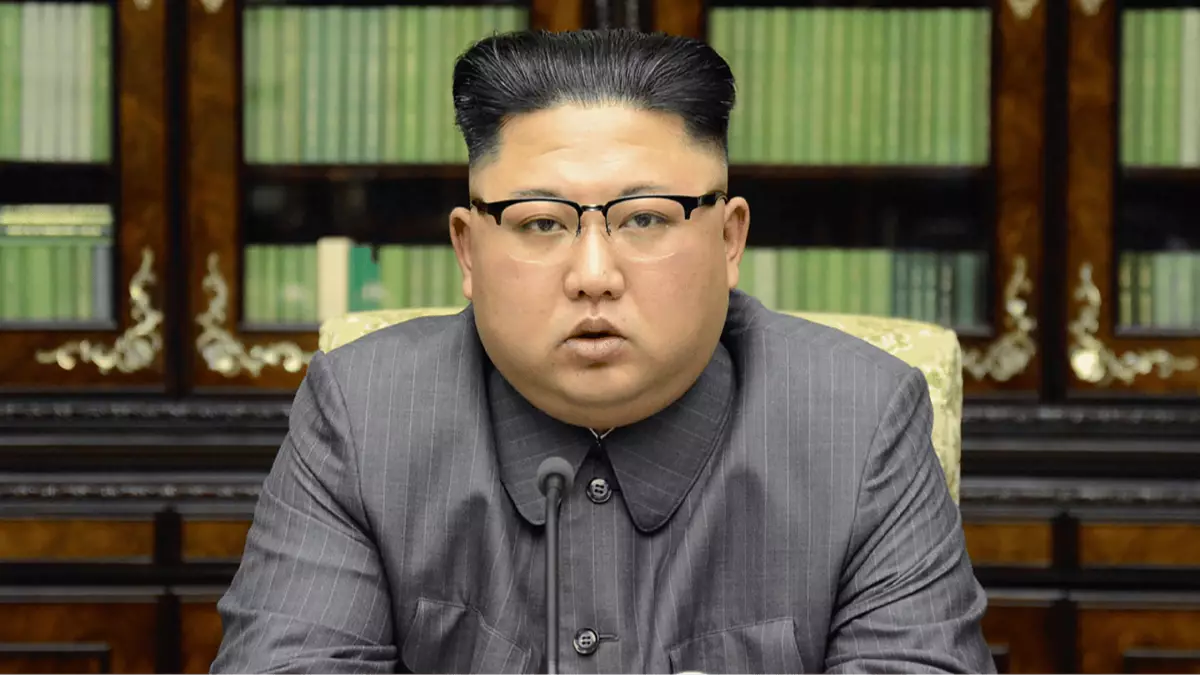


North Korea Market Closure 2026 | Critical Seller Risk Assessment for Asia-Pacific Expansion
- Amnesty International February 2026 report confirms zero-tolerance enforcement environment; sellers must reassess North Korea and high-risk markets in supply chain and expansion strategies


概览
The February 2026 Amnesty International report documenting North Korea's enforcement of the 2020 Anti-Reactionary Thought and Culture Act represents a critical market closure signal for cross-border e-commerce sellers. Based on 25 in-depth interviews with North Korean escapees (aged 15-25 at defection between 2019-2020), the investigation reveals systematic punishment ranging from 5-15 years forced labor to execution for consuming South Korean media—with bribes of $5,000-$10,000 USD required to escape penalties. This enforcement pattern directly impacts seller strategy in three critical areas: (1) Market Entry Risk Assessment: North Korea remains completely inaccessible for legitimate cross-border commerce due to comprehensive information control and unstable regulatory enforcement. The specialized 109 Group law enforcement unit conducts warrantless searches nationwide, making any business operations impossible. (2) Supply Chain Vulnerability: The report documents widespread underground smuggling networks using USB drives and notebook computers to distribute banned content through China, indicating fragile logistics infrastructure and unreliable partner networks in the region. Sellers sourcing from or shipping through North Korea face extreme compliance risks and potential sanctions exposure. (3) Geopolitical Precedent for Market Closure: The arbitrary enforcement system—where wealthy individuals escape $5,000-$10,000 bribes while poor citizens face labor camps—demonstrates how authoritarian regimes weaponize corruption to control markets. This pattern applies to other restricted markets (Iran, Syria, Venezuela) where sellers face similar unpredictable enforcement and bribery-dependent operations. The 2025 U.N. human rights assessment confirms North Korea's situation "has not improved over the past decade and, in many instances, has degraded," with worsening food shortages and forced labor expanding. For sellers, this signals that Asia-Pacific expansion strategies must include rigorous geopolitical risk screening, sanctions compliance monitoring, and avoidance of markets with systematic corruption-based enforcement. The report's documentation of periodic crackdowns that eliminate even wealth-based protection mechanisms indicates that no mitigation strategy—financial reserves, local connections, or compliance infrastructure—can guarantee operational stability in closed markets. Sellers should treat North Korea as a permanent market exclusion and apply similar risk frameworks to other authoritarian regimes with information control systems.
問題 8
How do public executions and forced attendance at executions impact market stability for sellers?
The Amnesty report documents that North Korea uses public executions as ideological control mechanisms, forcing tens of thousands of residents and school students to witness executions of individuals accused of spreading foreign media. This reveals a market where state terror is the primary enforcement mechanism and population control is prioritized over economic development. For sellers, this indicates that market stability is fundamentally incompatible with the regime's governance model. The report shows that executions serve as periodic reminders of enforcement severity, creating an environment where citizens cannot engage in normal economic activity without fear of state violence. Sellers cannot build customer relationships, supply chains, or payment systems in markets where the government uses public executions to control information access and economic behavior. The forced attendance at executions—including for school students—indicates that the regime prioritizes ideological control over human capital development, making long-term market growth impossible.
What does the 2025 U.N. assessment of degraded conditions mean for sellers evaluating North Korea?
The 2025 U.N. human rights assessment confirms that North Korea's situation "has not improved over the past decade and, in many instances, has degraded," citing worsening food shortages and expanded forced labor. This indicates that market conditions are moving in the wrong direction for sellers: purchasing power is declining, population control is intensifying, and economic activity is becoming more restricted. The assessment contradicts any argument that North Korea might eventually open to cross-border commerce or that conditions might improve. Sellers should treat the U.N. assessment as confirmation that North Korea is a permanent market exclusion with no realistic timeline for market opening. The degradation of conditions over the past decade suggests that the regime is doubling down on information control and economic isolation rather than moving toward market liberalization. For sellers, this means that any resources allocated to North Korea market research or expansion planning represent wasted investment with zero probability of return.