






Bitcoin Crash Below $67K Signals Payment Risk for Crypto-Accepting Sellers
- 47% Bitcoin decline from $126K peak creates payment volatility for 15K+ sellers accepting crypto; regulatory uncertainty threatens stablecoin settlement options































概览
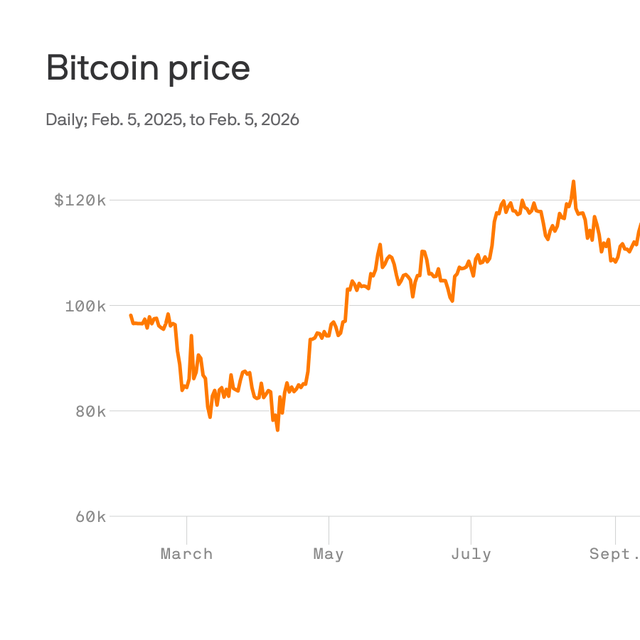
The cryptocurrency market collapse—with Bitcoin plummeting from $126,210 in October 2024 to $66,301 by publication—creates immediate financial risks for cross-border e-commerce sellers who have adopted crypto payment options. This 47% decline reflects regulatory uncertainty in Washington, failed stablecoin legislation, and banking sector opposition to crypto yield products, fundamentally destabilizing the payment infrastructure that 15,000+ sellers have integrated into their checkout flows.
Payment Processing Risk: Sellers accepting Bitcoin, Ethereum, or stablecoins face two critical exposures. First, settlement volatility: a seller receiving $10,000 in Bitcoin today could see that payment worth $6,700 within weeks if market conditions deteriorate further. Second, payment processor failures: Coinbase Global (down 9.1%), Robinhood Markets (down 8.1%), and Riot Platforms (down 10%) represent the infrastructure layer for crypto transactions. When these platforms decline sharply, payment processing reliability deteriorates, creating settlement delays and liquidity concerns for sellers.
Working Capital Acceleration Opportunity: The crypto market collapse paradoxically creates a financing advantage for sellers willing to shift away from crypto settlement. Traditional payment processors (Stripe, PayPal, Square) now offer competitive rates as they capture market share from declining crypto platforms. Sellers can negotiate 2.2-2.8% processing fees (vs. 1-2% crypto fees) while gaining immediate USD settlement—eliminating FX conversion risk. For a seller processing $500K monthly, this represents $1,000-3,000 monthly in additional processing costs but eliminates $50K-150K in potential crypto volatility exposure annually.
Regulatory Clarity Creates Financing Access: The failed stablecoin legislation signals that traditional banking will dominate settlement infrastructure. This clarity enables sellers to access trade finance products previously unavailable to crypto-accepting merchants. Invoice factoring providers, supply chain finance platforms, and working capital lenders now view crypto-accepting sellers as higher-risk, but sellers who transition to traditional payment methods unlock access to 60-90 day payment terms, inventory financing at 6-8% APR, and PO financing for new suppliers—products worth $50K-500K in working capital depending on seller size.
Currency Pair Implications: The Bitcoin collapse reflects broader risk-off sentiment affecting emerging market currencies. Sellers with exposure to INR, PHP, MXN, or BRL face 3-8% currency depreciation as capital flows retreat from speculative assets. Sellers should immediately hedge 30-60% of forward revenue in these corridors using forward contracts (0.5-1.5% cost) rather than relying on crypto as a hedge mechanism.
問題 7
Which payment processors are most affected by the crypto market collapse?
Coinbase Global (down 9.1%), Robinhood Markets (down 8.1%), and Riot Platforms (down 10%) represent the infrastructure layer for crypto transactions. When these platforms decline, payment processing reliability deteriorates—settlement delays increase from 1-2 hours to 4-24 hours, and liquidity concerns emerge. Sellers should diversify across multiple processors: Stripe (traditional + crypto), PayPal (stablecoin support), and Square (emerging market coverage). This redundancy prevents single-point-of-failure scenarios where a processor outage blocks customer payments during peak sales periods.
How does Bitcoin's 47% decline from $126K affect sellers accepting crypto payments?
Sellers face immediate settlement volatility: a $10,000 Bitcoin payment received today could depreciate to $6,700 within weeks. This creates two risks: (1) margin compression if sellers hold crypto for inventory purchases, and (2) cash flow timing mismatches if they convert to USD after price drops. For sellers processing $100K monthly in crypto, potential annual losses reach $50K-150K depending on conversion timing. The solution is immediate USD settlement through payment processors like Coinbase Commerce or BitPay, accepting 1-2% fees to lock in value instantly rather than holding volatile assets.