



)
Russia Market Collapse 2026 | Cross-Border Sellers Face 50% Revenue Risk
- IMF downgrades growth to 0.6-0.8%, oil revenues plunge 50%, banking crisis threatens payment processing for 10M+ Russian e-commerce consumers









概览
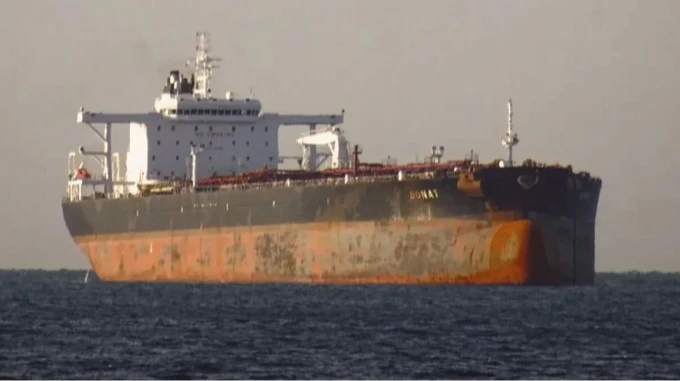
Russia's economy is entering a structural crisis that fundamentally reshapes cross-border e-commerce market dynamics. The International Monetary Fund downgraded Russia's growth forecasts to just 0.6% for 2025 and 0.8% for 2026—the lowest rates outside pandemic years since 2014 sanctions. More critically, oil and gas revenues have collapsed 50% to Putin-era lows, with fossil fuel tax contributions dropping from 40% of the federal budget in 2022 to 25% by late 2025. Ural crude prices fell from $90 to $50 per barrel, while Russia's fossil fuel export earnings in 2025 were 13% below prewar levels. This creates a cascading crisis: the Kremlin faces a $16 billion budget shortfall, the central bank reports $130 billion in non-performing loans (10% of banking assets), and interest rates have spiked to 16%, creating a formal banking crisis confirmed by the Kremlin-aligned Center for Macroeconomic Analysis.
For cross-border e-commerce sellers, this represents an immediate market contraction with 3-4 month urgency. Russian officials warned of a potential large-scale economic downturn in Q2 2026, with real inflation significantly exceeding the official 6% figure. The banking sector faces mounting pressure from coercive corporate lending to finance Ukraine operations, directly threatening payment processing reliability. Russia's population declined from 145.5 million in 2019 to 143.5 million in 2024—a 2 million person contraction driven by war casualties, emigration, and falling fertility rates. The Kremlin's response is redirecting federal spending toward defense while cutting education, healthcare, and welfare funding, signaling a structural decline in middle-class purchasing power. This demographic collapse differs fundamentally from temporary economic cycles: unlike Western nations that offset population decline through immigration, Russia lacks this mechanism, ensuring sustained consumer demand weakness.
Seller segments face differentiated impacts by market exposure and payment infrastructure. Sellers with 30-50% of revenue from Russian consumers face immediate portfolio rebalancing needs. Payment processing becomes critical: the 16% interest rate environment and $130 billion non-performing loan crisis means Russian banks are rationing credit, reducing consumer purchasing power for imported goods. Currency volatility compounds this—the ruble's unexpected strength creates contradictions with falling oil revenues, signaling potential devaluation ahead. Sellers relying on Russian payment gateways (Yandex.Kassa, Sberbank) face heightened transaction failure rates as banking sector stress increases. The 20 of 28 civilian industrial sectors contracting indicates broad-based economic weakness, not sector-specific challenges. Sellers in discretionary categories (electronics, apparel, home goods) face the steepest demand declines as consumers prioritize essential goods. Conversely, sellers in budget-friendly categories and value-oriented products may see relative resilience, though overall market size is shrinking. The timing window is critical: Q2 2026 represents the crisis inflection point, meaning sellers have 3-4 months to adjust inventory, payment terms, and market positioning before acute financial stress hits Russian consumers and payment systems.
問題 8
How do Western sanctions on Russian energy exports amplify the economic crisis for sellers?
Western sanctions targeting Russian energy sectors, including price caps on crude oil and restrictions on refined product imports, have constrained Russia's fossil fuel export earnings to 13% below prewar levels. The EU's systematic reduction of Russian energy dependence and global energy market volatility have combined to create a structural revenue collapse that cannot be offset by alternative buyers like China, India, and Turkey. These sanctions directly reduce government revenues available for social spending and consumer welfare programs, accelerating the decline in middle-class purchasing power. For sellers, sanctions-driven economic contraction signals a prolonged market adjustment period rather than temporary fluctuation, requiring strategic portfolio rebalancing away from Russia.
What are the competitive implications for sellers as Russia's market contracts?
Russia's economic contraction creates a bifurcated competitive landscape: large sellers with diversified geographic portfolios can weather the market decline, while small and medium sellers with concentrated Russian exposure face severe margin compression. The 2 million population decline and 20 of 28 contracting industrial sectors indicate broad-based market shrinkage, not competitive repositioning opportunities. Sellers maintaining Russian market presence will face intensified competition for the shrinking consumer base, driving down margins and increasing customer acquisition costs. The banking crisis and 16% interest rates reduce consumer credit availability, shifting competitive advantage toward sellers offering payment flexibility or budget-friendly products. Sellers should view Russia as a declining market where competitive intensity increases while absolute market size shrinks.