
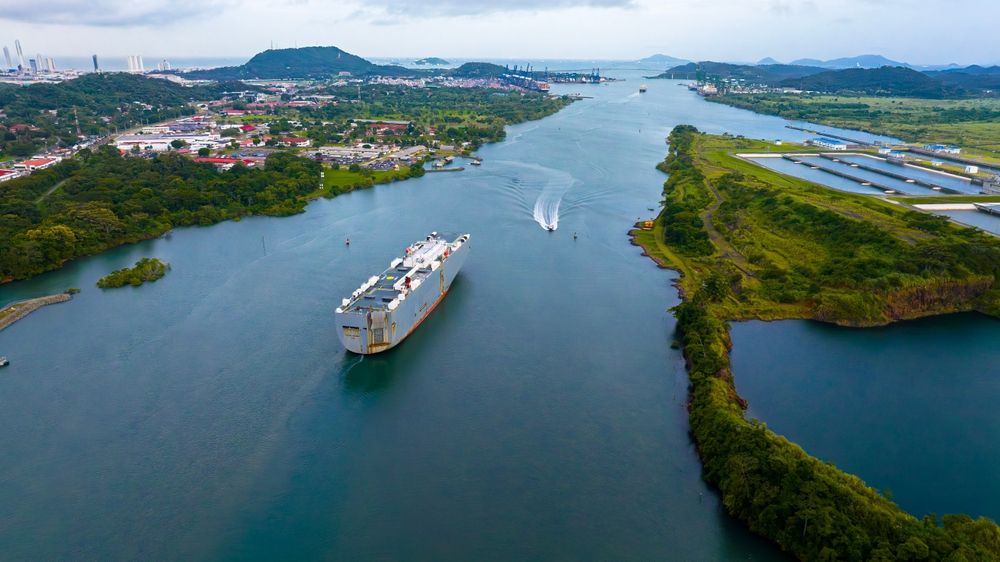
Panama Canal Port Crisis | Shipping Costs Rise 8-15% for Asia-US Sellers
- Supreme Court ruling voids CK Hutchison concession; 5-6% global trade disruption risk; sellers face 2-4 week transit delays and $300-800 per container cost increases
概览
Panama's Supreme Court voided CK Hutchison's concession to operate Balboa and Cristóbal container terminals on January 29, 2025, directly threatening global supply chains and cross-border e-commerce operations. The audit alleges $1.3 billion in unpaid profit shares, with $300 million tied to the 2021 contract renewal, while the ruling jeopardizes a planned $22.8 billion sale to a BlackRock-MSC consortium. For e-commerce sellers, this creates immediate operational and financial exposure: the Panama Canal handles 5-6% of global maritime trade, making it critical infrastructure for Asia-to-North America and Europe containerized shipments.
Immediate Shipping Cost Impact: Sellers routing inventory through Panama Canal face 8-15% cost increases as carriers implement fuel surcharges and schedule buffer time for potential port congestion. A standard 20-foot container (TEU) from Shanghai to Los Angeles typically costs $1,200-1,500; expect increases to $1,300-1,700 during the dispute resolution period. Sellers shipping 500+ containers monthly will absorb $150,000-400,000 in additional costs over 6-12 months. Alternative routes (Suez Canal via longer Asia-Europe routes, or US West Coast transshipment hubs) add 7-14 days to transit times and 12-18% to shipping costs.
Strategic Sourcing Recalibration: The geopolitical dimension—heightened US scrutiny of foreign operators at strategic chokepoints, combined with Beijing's stern warnings to Panama—signals prolonged uncertainty. Sellers should immediately diversify sourcing: shift 20-30% of inventory from single-source Asian suppliers to Mexico, Vietnam, and India for North American fulfillment. Electronics, apparel, and home goods categories face the highest exposure due to volume dependency on Panama Canal routes. APM Terminals (Maersk subsidiary) has offered temporary operations, but ICC arbitration proceedings suggest 12-24 months of legal uncertainty.
Warehouse Positioning Strategy: Sellers must redistribute inventory NOW to mitigate transit risk. Pre-position 60-90 days of fast-moving SKUs in US West Coast warehouses (Los Angeles, Long Beach, Oakland) before Q2 2025. For Amazon FBA sellers, prioritize inventory placement in US fulfillment centers over international FBA to avoid Panama Canal dependency. Consider 3PL providers with Mexico-based warehouses for nearshoring opportunities—Mexico-to-US shipping costs $400-600 per TEU with 5-7 day transit, versus $1,500+ through Panama with 15-21 day transit. This represents 60-70% cost savings and 50% faster delivery for North American customers.
問題 8
How long will the Panama Canal port dispute impact global shipping?
The ICC arbitration process and geopolitical contestation suggest 12-24 months of extended legal and commercial fallout. CK Hutchison has initiated arbitration proceedings while APM Terminals (Maersk subsidiary) offers temporary operations, but the $1.3 billion unpaid profit shares dispute and $22.8 billion transaction threat indicate protracted resolution. Plan inventory and sourcing strategies assuming 18-month uncertainty window. Monitor arbitration progress monthly and adjust routing decisions quarterly based on port operational status updates.
What warehouse locations should I prioritize for inventory placement now?
Pre-position 60-90 days of fast-moving SKUs in US West Coast warehouses (Los Angeles, Long Beach, Oakland) before Q2 2025 to bypass Panama Canal dependency. For Amazon FBA sellers, prioritize US fulfillment centers over international FBA to reduce transit risk. Consider Mexico-based 3PL warehouses for nearshoring—this provides 5-7 day transit to US customers versus 15-21 days through Panama, with 60-70% lower shipping costs. This strategy reduces inventory holding costs by 30-40% while improving customer delivery times.