





Bitcoin 50% Crash Signals Crypto Winter | Cross-Border Payment Risk & Working Capital Challenges
- Bitcoin plunges from $126,272 to $60,057 in worst week since FTX collapse; negative funding rates signal institutional bearishness; crypto payment processors face liquidity squeeze; sellers holding crypto reserves face 50%+ unrealized losses






















概览
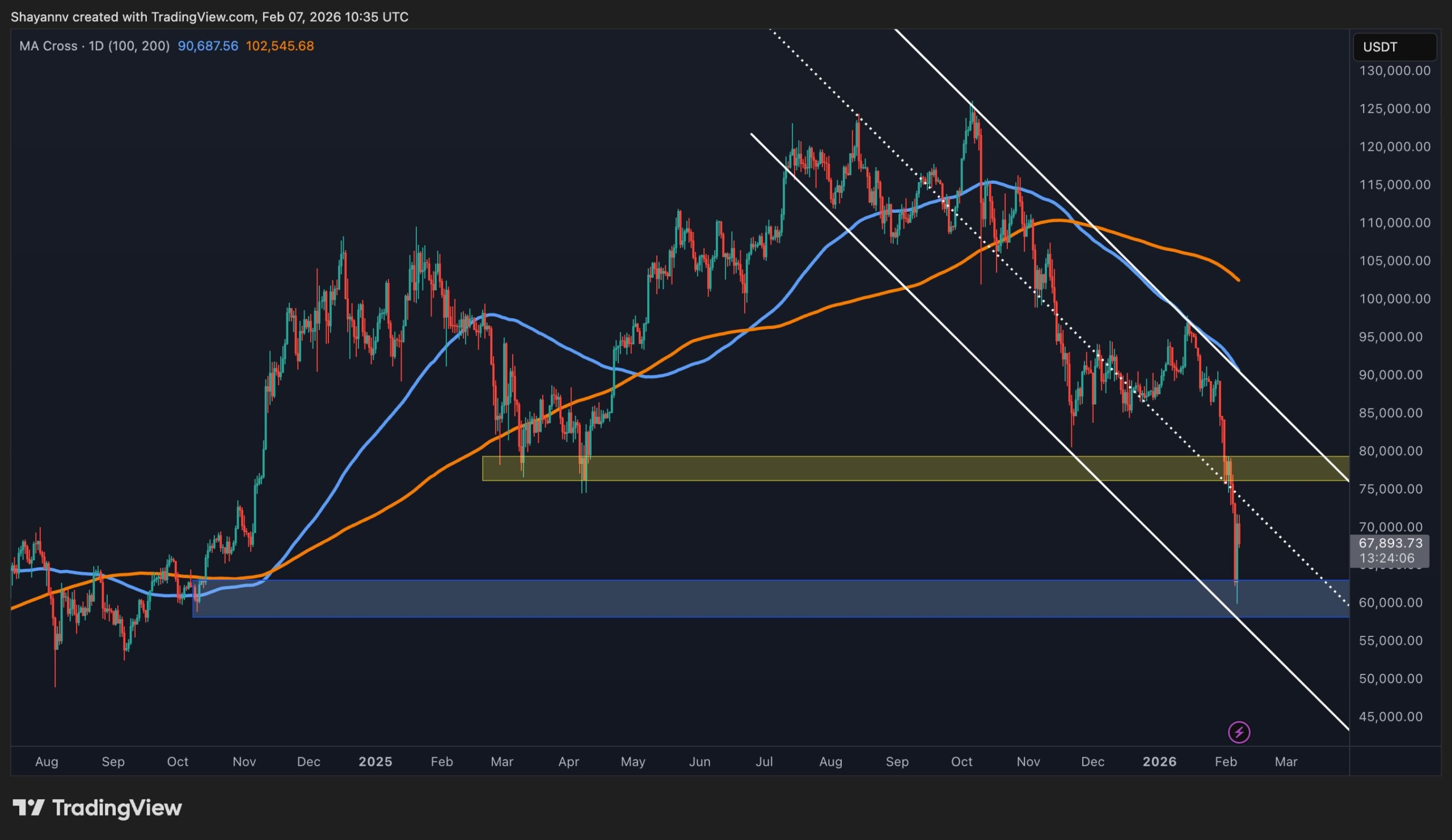
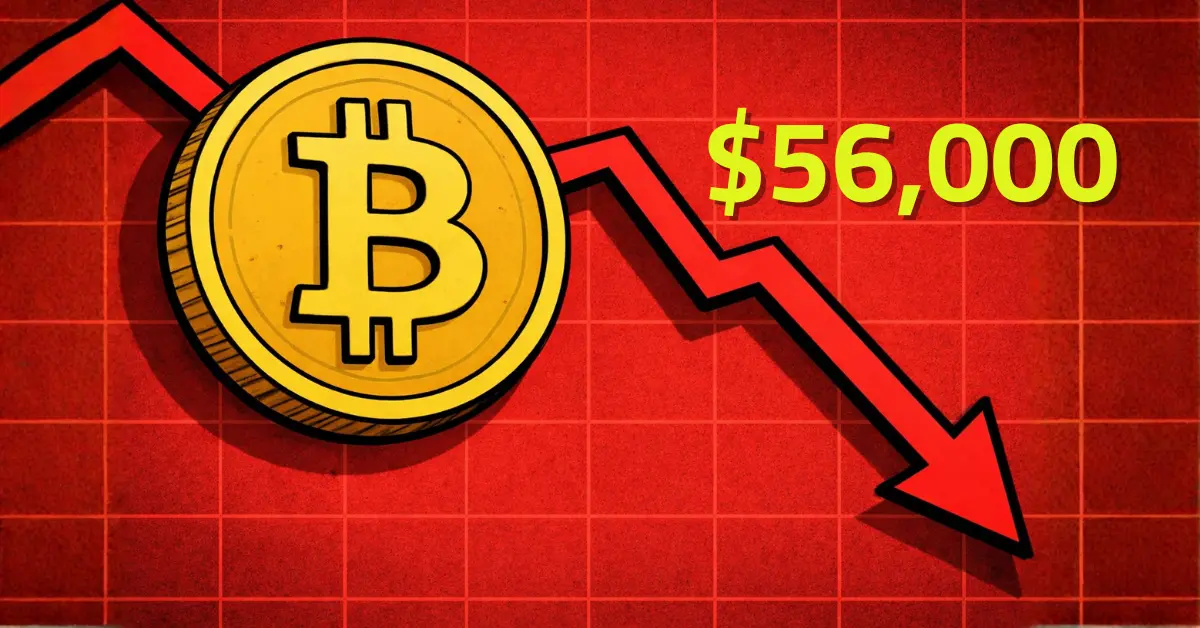
Bitcoin's 50% collapse from its October 2025 peak of $126,272.76 to $60,057 in February 2026 represents the cryptocurrency market's most severe correction in three years, creating immediate financial stress for cross-border e-commerce sellers who have integrated crypto payments or hold digital assets as treasury reserves. The Bloomberg analysis reveals a critical divergence between spot price recovery toward $70,000 and deeply bearish derivatives positioning—negative funding rates on perpetual futures indicate professional traders are demanding compensation to hold long positions, signaling expectations of further downside. This pattern historically precedes major market corrections and reflects institutional conviction that current price levels represent selling opportunities rather than accumulation points.
For sellers accepting cryptocurrency payments, this volatility creates three immediate operational challenges: (1) Payment Processing Risk - Conversion timing becomes critical when BTC swings 15% week-to-date; sellers converting crypto to fiat face potential 5-10% slippage if execution occurs during downswings; (2) Working Capital Freeze - Stablecoin liquidity is contracting sharply, with Tether capital-raising efforts declining from $15-20 billion to approximately $5 billion, reducing payment settlement speed by 3-7 days; (3) Consumer Confidence Erosion - The "crypto winter" environment (historically lasting 6-24 months) reduces buyer willingness to pay in Bitcoin or altcoins, potentially cutting crypto payment adoption rates by 30-40% among retail customers.
The derivatives market weakness is particularly significant for sellers using crypto-backed financing. Negative funding rates indicate that leveraged traders are unwinding positions, reducing available liquidity for invoice financing products that depend on crypto collateral. MicroStrategy's $5.4 billion Bitcoin position being down 3% despite massive accumulation demonstrates that even institutional-scale dollar-cost averaging cannot overcome bear market momentum. For sellers with crypto exposure, this environment demands immediate portfolio rebalancing: convert 60-80% of crypto holdings to stablecoins or fiat within 7-14 days to lock in current prices before further deterioration; diversify payment acceptance away from volatile cryptocurrencies toward traditional payment processors (Stripe, PayPal, Wise) offering 1.5-2.5% fees versus crypto's 0.5-1% but with guaranteed settlement; and establish credit lines with traditional lenders before crypto collateral values decline further, as many fintech lenders are tightening crypto-backed lending terms by 200-300 basis points.
問題 7
What immediate actions should sellers take in the next 7-14 days?
Sellers should execute a three-step de-risking plan: (1) Convert 60-80% of crypto holdings to stablecoins (USDC, USDT) or fiat within 7 days, locking in current prices before potential further decline to $45,000-50,000; (2) Establish credit lines with 2-3 traditional lenders (banks, Clearco, Fundbox) before crypto collateral values decline further, securing working capital at 6-8% APR versus crypto-backed financing at 12-15%+ APR; (3) Audit all payment processors accepting crypto and shift 80%+ of payment acceptance to traditional methods (Stripe, PayPal, Wise) with 1.5-2.5% fees but guaranteed 1-2 day settlement. For sellers with significant crypto exposure ($50,000+), this rebalancing can unlock $10,000-25,000 in immediate working capital by converting to fiat and accessing traditional financing at lower rates.
Are there any FX arbitrage opportunities during this crypto market downturn?
The crypto winter creates limited arbitrage opportunities for sellers. Bitcoin's 59% decline versus gold (from November 2021 peak) suggests gold-backed payment products may outperform crypto-based alternatives, but gold lacks the liquidity for e-commerce payments. More practical: sellers with USD and EUR exposure can exploit the divergence between crypto payment processors (offering 0.5-1% fees with 3-7 day settlement) and traditional FX providers (1.5-2.5% fees with 1-2 day settlement) by using traditional methods for time-sensitive payments and crypto only for non-urgent, high-volume transactions where the fee savings justify settlement delays. However, given the bearish derivatives positioning and potential for further downside, arbitrage opportunities are minimal; focus instead on risk reduction rather than profit-taking during this environment.